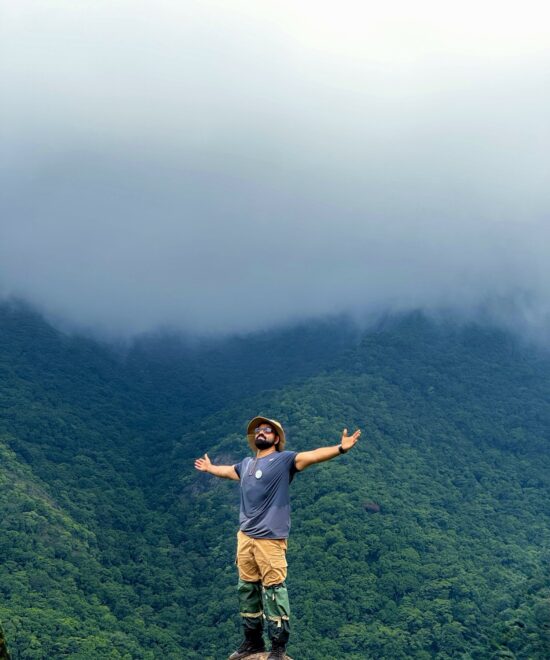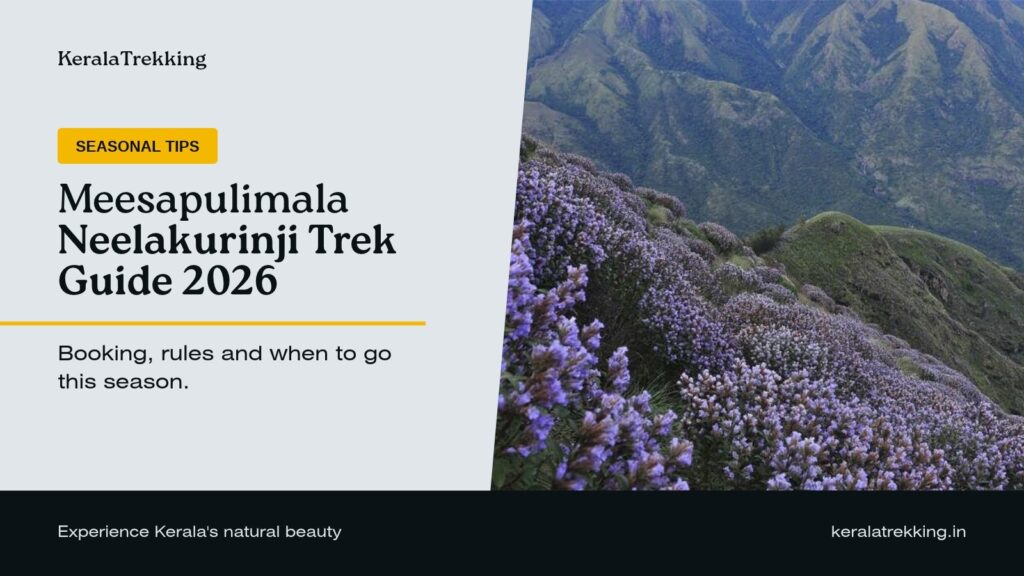
Meesapulimala is open for the 2026 Neelakurinji season. The Kerala Forest Development Corporation (KFDC) opened its special Kurinji season programme to visitors from 26 October 2026, and the purple-blue flowers are showing on the slopes near Rhodo Valley, below the 2,640 m summit. If you want to see Meesapulimala Neelakurinji this year, plan for November or early December and book before you travel. One thing to know early: the special KFDC Kurinji package is a jeep visit to see the flowers, not the summit trek. This guide covers what is blooming, how booking works, what the trek involves and how to plan the trip from Kochi, Bengaluru or Chennai.
Want us to handle the planning? Our Purple Trail Meesapulimala trek is the full Meesapulimala summit trek during the Neelakurinji season, not just a jeep drive to the flowers. It runs as a one-day trip with overnight travel from Aluva, a KFDC forest guide and a KeralaTrekking trek coordinator. See batch dates and what is included.
What is happening on Meesapulimala this season
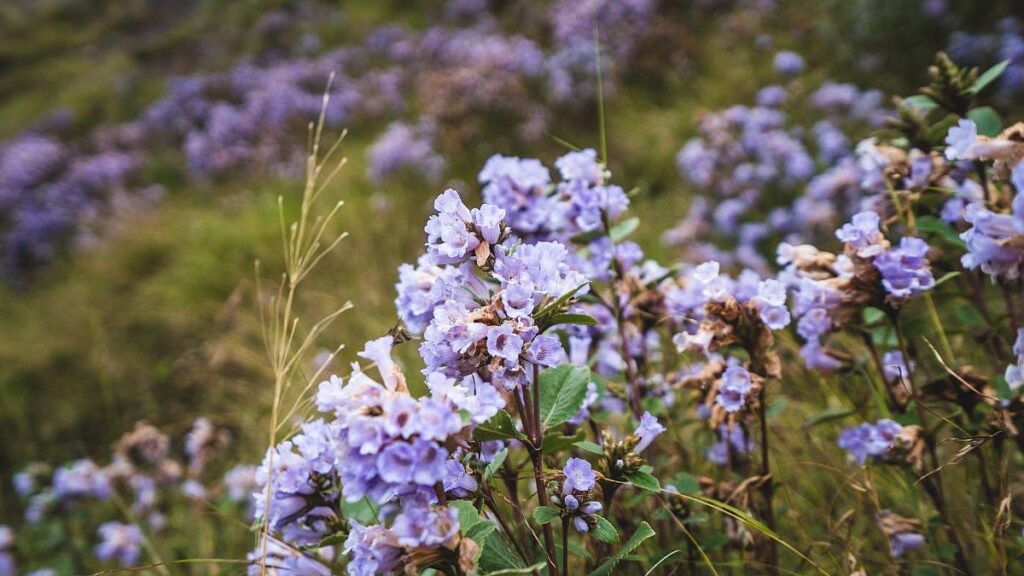
Neelakurinji (Strobilanthes kunthiana) is a shrub of the Western Ghats grasslands that flowers in mass once every 12 years or so, then dies back. Different hill populations around Munnar follow their own cycles. Lower hills closer to Munnar flowered first, in July and August 2026, and that early bloom is now over. Forest officials expected the bloom to move up to higher ground, including Meesapulimala, through September and October.
That is what has happened. Reports in late October describe flowering on the slopes of Meesapulimala near Rhodo Mansion, a KFDC property at about 2,470 m. This is unusual, because the plant rarely flowers this high. Flowering here is expected to continue from October to December 2026. The previous mass bloom of this population was in 2014, so for most trekkers this is a once-in-a-decade chance.
One point people often mix up: the famous Rajamala bloom inside Eravikulam National Park is a separate population. It last flowered in 2018 and is not due again until around 2030. If you want to see Neelakurinji in the rest of 2026, Meesapulimala is the place to go.
How booking works this Kurinji season
Meesapulimala sits inside an ecologically sensitive, KFDC-managed area. You cannot walk in on your own, and this season the rules are tighter than usual. Based on current reports:
- Booking is compulsory. Slots are booked online. Reports mention both the KFDC eco-tourism website and a new Kurinji mobile app launched by KFDC with the Wildlife Trust of India.
- Daily cap. Visitor numbers are limited to 750 a day, so weekends and holidays fill quickly.
- Signed permit. After registering, the permit has to be collected in signed hard copy from the KFDC office in Munnar town before you head to base camp.
- Forest guide. Every group must walk with a certified forest guide. Independent visits are not allowed.
- KFDC Kurinji package. Reported at ₹1,250 per person (₹1,475 with GST), covering a forest jeep from Munnar to the Kurinji slopes and back, with a snack box and drinking water. It does not include the summit trek.
Fees, timings and rules can change at short notice during a bloom season, so confirm everything on the KFDC eco-tourism site for your date. Our Meesapulimala permit and KFDC booking guide explains the documents and the usual process in more detail.
KFDC Kurinji visit vs the full Meesapulimala trek
These are two different experiences, and it is easy to book the wrong one. We checked directly with KFDC: the special Kurinji season package is a jeep visit. The forest jeep takes you up from Munnar, stops where the Neelakurinji is flowering, and brings you back. There is no trek and no summit.
- KFDC Kurinji jeep visit: a drive to the flowering slopes and back. Good if you only want to see and photograph the bloom, or cannot walk long distances.
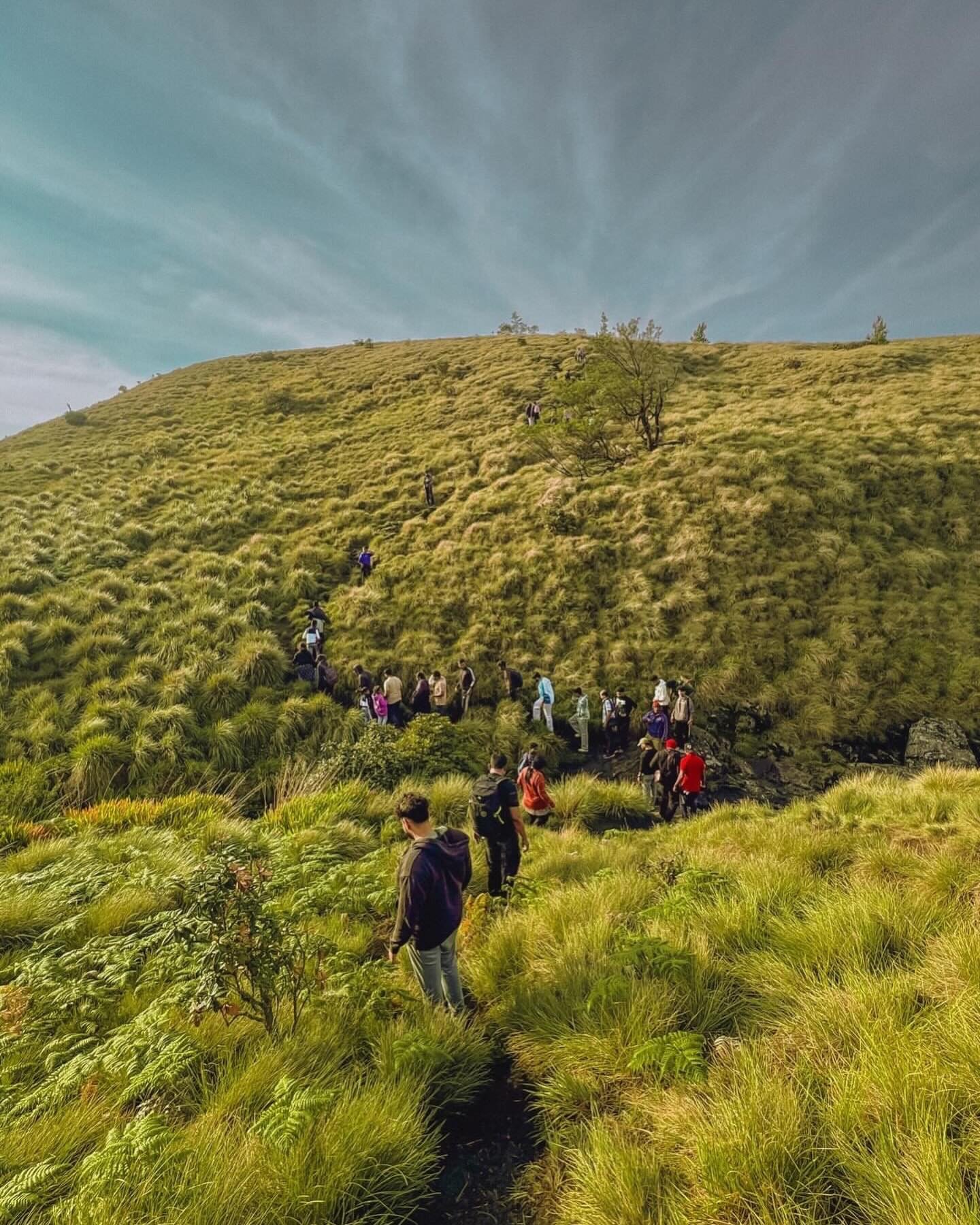
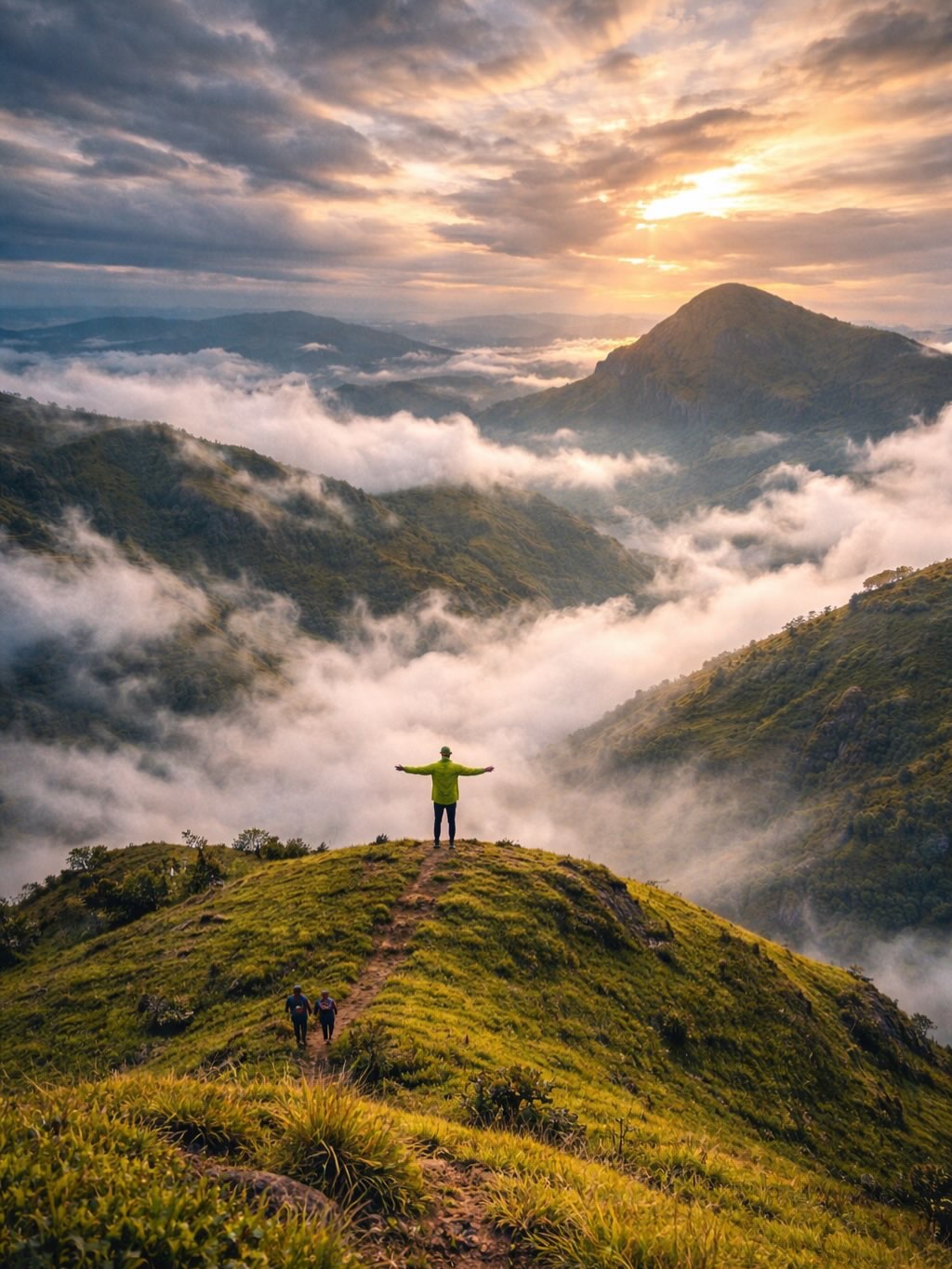
- Full Meesapulimala trek: the jeep to base camp and Rhodo Valley, then 8 to 10 km on foot with a forest guide over the grassland ridges and shola pockets to the 2,640 m summit. You see the Neelakurinji on the slopes on the way, and you also get the summit, the views across to Anamudi and, on a clear morning, the sea of clouds.
Both need advance booking with KFDC, so check which programme you are booking before you pay. Ask KFDC how the 750-a-day limit applies to each programme on your date. Even on the full trek, weather can stop a group short of the summit, and the forest guide’s decision is final.
The trek at a glance
- Summit altitude: 2,640 m (8,661 ft), the second-highest peak in the Western Ghats after Anamudi
- Location: Near Munnar, Idukki district
- Starting point: KFDC base camp, then Rhodo Valley, the last point a jeep can reach
- Walking distance: About 8 to 10 km return from Rhodo Valley
- Time on the trail: 6 to 8 hours, depending on pace and weather
- Difficulty: Moderate. Long and steady, with a steep final climb, but nothing technical
- Best window for flowers: November to early December 2026
The route crosses a chain of grassy hills with pockets of shola forest in the folds between them. Most of the flowering reported so far is on the slopes around Rhodo Valley, so you can see Neelakurinji even if weather or time stops you short of the top. For a section-by-section description, read our complete Meesapulimala trek guide or this Meesapulimala route and difficulty breakdown.
November weather on Meesapulimala
November in the Munnar high ranges falls in the northeast monsoon, which brings rain to the southern hills mostly in the afternoons and evenings. Mornings are often clear, cold and spectacular, with a sea of clouds below the ridges. By late morning, mist tends to roll up the slopes and visibility can drop to a few metres.
What that means in practice:
- Start as early as your slot allows. The best light on the flowers and the clearest summit views come before 10 am.
- Expect the grass to be wet. The descent is slippery after rain, and leeches are possible in shola patches.
- Pack for cold. Summit temperatures on a windy morning feel much colder than Munnar town.
- Watch for heavy-rain alerts from the India Meteorological Department for Idukki. Treks can be stopped or cut short on bad-weather days, and the forest guide’s decision is final.
Neelakurinji rules: what you must not do
Neelakurinji is a protected plant under the Wildlife (Protection) Act, 1972. During the 2026 season, plucking flowers, uprooting plants or damaging vegetation is being treated as an offence, with reports of fines up to ₹25,000 and possible imprisonment. Beyond the law, a 12-year flowering cycle means a trampled patch has a long wait to recover.
- Do not pick, uproot or step into Neelakurinji patches, even for a photo.
- Stay on the trail and behind your forest guide.
- No drones unless you have written permission.
- No alcohol, smoking or loud music.
- Carry every wrapper and bottle back down.
Our trek rules and responsible trekking page sets out the standards we follow on every KeralaTrekking trek.
Planning the trip from Kochi, Bengaluru and Chennai
From Kochi and central Kerala
Munnar is roughly a four-hour drive from Kochi via Kothamangalam and Adimali. The most practical plan is an overnight start from Aluva or Kochi so you reach Munnar before dawn, collect your permit, and are on the jeep road early. That way you see the flowers in morning light and come down before the afternoon rain. This is exactly how our Purple Trail is planned: a midnight pickup at Aluva Railway Station, the trek the next morning and the drop back at Aluva the same evening.
From Bengaluru and Chennai
Take an overnight bus or train towards Ernakulam or Aluva, or drive via Coimbatore, Udumalpet and Marayoor. Plan at least two nights: arrive and rest in Munnar, trek the next morning, and keep a spare half-day in case weather closes the trail. A Friday-night departure and Sunday-night return is the realistic minimum. If you reach Aluva by Friday night, you can join a Purple Trail batch and skip the hotel night before the trek.
What to carry
- Trekking shoes with deep grip (wet grass is the main hazard)
- Rain jacket or poncho, plus a warm fleece for the summit
- Cap, sunscreen and sunglasses for the exposed ridges
- Two litres of water and simple snacks; there are no shops on the trail
- Original photo ID and your booking or permit
- Personal medicines and a small first-aid kit
- A zip-lock bag to carry your waste back out
- Power bank; phone signal is patchy
The full Meesapulimala packing list covers day treks and camping. If this is your first long trek, a few weeks of preparation with our fitness plan for your first Kerala trek will make the climb far more enjoyable.
Practical tips for a good Kurinji day
- Book weekdays if you can. With a daily cap, Saturdays and Sundays sell out first.
- Manage expectations. Neelakurinji is a natural bloom. Some slopes will be carpeted, others patchy, and rain can knock flowers down in a day.
- Photograph without trampling. A short telephoto or simply crouching on the path gives better pictures than walking into a patch.
- Respect the turnaround call. Even on a summit trek, mist or rain can stop a group short of the top. On those days the flowers near Rhodo Valley may be the highlight, and turning back on time is part of a good trek.
- Respect wildlife. Nilgiri tahr, gaur and elephants use these hills. Keep your distance and follow the guide.
FAQ: Meesapulimala Neelakurinji 2026
Is Neelakurinji blooming on Meesapulimala right now?
Late-October reports describe flowering on the slopes near Rhodo Mansion and Rhodo Valley, with the season expected to run until December 2026. Bloom density changes with weather, so check the latest reports a few days before you go.
Can I trek Meesapulimala without a guide during the Kurinji season?
No. A KFDC booking and a certified forest guide are required for every group, and independent visits are not allowed.
Does the KFDC Kurinji package include the Meesapulimala summit trek?
No. KFDC confirmed to us that the special Kurinji package is a jeep visit: you are driven to the flowering slopes and back, with no trek. To walk to the summit you need the full Meesapulimala trek, such as our Purple Trail.
Is the Meesapulimala trek suitable for beginners?
Active beginners who walk regularly usually manage it. It is a long day of 8 to 10 km on open, steep grassland rather than a technical climb. If you have knee, heart or breathing concerns, speak to a doctor first and tell your organiser when booking.
When is the best time of day to see the flowers?
Early morning. The light is soft, the ridges are usually clear, and you avoid the afternoon mist and rain typical of November.
Does KeralaTrekking run a Neelakurinji trek to Meesapulimala?
Yes. The Purple Trail is the full summit trek, not the jeep-only visit. It runs on selected Saturdays in November and December 2026, with overnight travel from Aluva, a KFDC forest guide and a KeralaTrekking trek coordinator. Custom dates are available for groups.
Will Eravikulam National Park have Neelakurinji in 2026?
Not in a mass bloom. The Eravikulam population flowered in 2018 and is expected next around 2030. Meesapulimala is where it is flowering now.
The Purple Trail: the full Meesapulimala summit trek this Kurinji season
The Purple Trail is our Neelakurinji season trek to Meesapulimala, and it is the full trek to the summit, not the jeep-only Kurinji visit. You see the flowers on the slopes and then keep walking to the 2,640 m top with a KFDC forest guide and our trek coordinator. It is built for people who want this without taking leave or booking a hotel: you travel overnight, trek in the morning and are back the same day.
- Full summit trek: 8 to 10 km on foot from Rhodo Valley to the 2,640 m summit and back, through the Kurinji slopes. Not a jeep viewing.
- Batch dates (Saturdays): 7 November, 21 November, 5 December, 19 December and 26 December 2026
- Pickup and drop: Aluva Railway Station, with pickup at midnight as the Saturday begins. A Munnar pickup can be arranged on request.
- Total price: ₹4,549 per person (₹3,999 trek package + ₹550 off-road jeep)
- Private dates: we arrange custom dates for groups, families, colleges and companies
Jeep visit or summit trek: what ₹1,250 and ₹4,549 each cover
The two prices are for different experiences. The KFDC package is a jeep visit to see the flowers, booked by you from Munnar. The Purple Trail is the full summit trek as a complete trip from Aluva, with the KFDC trek entry and forest guide included.
| KFDC Kurinji jeep visit | Purple Trail full summit trek | |
|---|---|---|
| What you do | Jeep to the Kurinji slopes, see the flowers, jeep back | 8 to 10 km guided trek through the Kurinji slopes to the 2,640 m summit |
| Reaches the summit | No | Yes, weather permitting |
| Getting to Munnar | Your own travel and costs | Overnight transport from Aluva Railway Station and back |
| Vehicle beyond Munnar | KFDC jeep, included | 60 km off-road jeep, Munnar to Rhodo Valley and back: ₹550, paid separately |
| Trek entry and forest guide | Not applicable (no trek) | Included in ₹3,999; we book the slot |
| Food | Snack box and drinking water | Breakfast and lunch |
| Trek coordinator | No | KeralaTrekking trek coordinator |
| Extras | None | KeralaTrekking badge |
| Price per person | ₹1,250 (reported; ₹1,475 with GST) | ₹4,549 (₹3,999 + ₹550 jeep) |
If you only want to see the flowers from a vehicle and can reach Munnar early on your own, the KFDC jeep visit is the cheaper choice. If you want to actually trek Meesapulimala, walk the ridges and stand on the summit with the Kurinji below you, you need the full trek, and that is what the Purple Trail includes.
Neelakurinji is a natural bloom, so we cannot promise flower density on any date. We share the latest trail report on WhatsApp before you pay.
Sources for season details: Free Press Journal and Onmanorama. Always confirm fees, timings and slot availability with KFDC for your date.