KeralaTrekking Destination Guide
Hidden within the Nilgiri Hills of Kerala’s Palakkad district, Silent Valley National Park protects one of India’s most important tropical evergreen rainforest landscapes. Known for its remarkable biodiversity, lion-tailed macaques, the pristine Kunthipuzha River and the historic Save Silent Valley movement, this protected forest offers a very different experience from a conventional tourist destination.
Silent Valley is not a place built around resorts, artificial attractions or crowded viewpoints. It is a conservation landscape where the rainforest itself is the destination.
This complete Silent Valley National Park travel and trekking guide covers its history, biodiversity, wildlife, visitor experience, best time to visit, entry permissions, transportation, responsible travel guidelines and practical information for planning your trip in 2026.
Contents
- Silent Valley at a Glance
- Where Is Silent Valley?
- Why Is Silent Valley So Special?
- Why Is It Called Silent Valley?
- The Save Silent Valley Movement
- Biodiversity and Wildlife
- The Kunthipuzha River
- Silent Valley Visitor Experience
- Best Time to Visit
- How to Reach Silent Valley
- Book Your Silent Valley Experience with KeralaTrekking
- What to Carry
- Responsible Travel Guidelines
- Nearby Places to Visit
- Frequently Asked Questions
Silent Valley National Park at a Glance
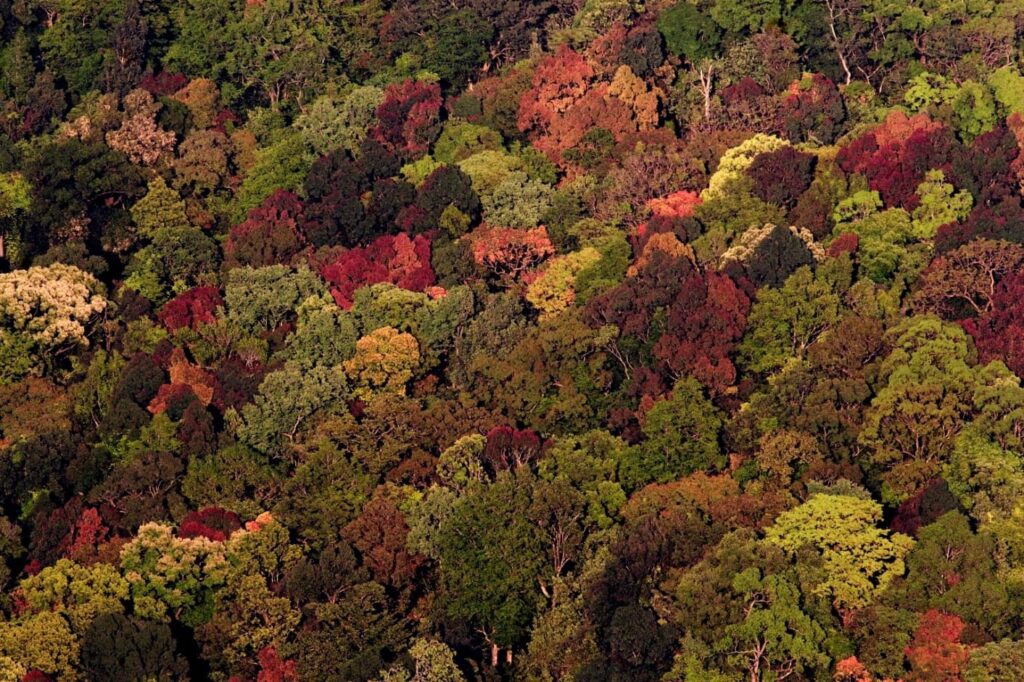
Location Palakkad district, Kerala Main visitor gateway Mukkali National park core area 89.52 square kilometres Buffer forest area Approximately 148–149 square kilometres Total administrative landscape Approximately 237.52 square kilometres Declared a national park 15 November 1984 Formally inaugurated 7 September 1985 Biosphere reserve Core area of the Nilgiri Biosphere Reserve since 1986 UNESCO status Component of the Western Ghats UNESCO World Heritage property Major river Kunthipuzha River Iconic wildlife Lion-tailed macaque, Nilgiri langur, Malabar giant squirrel, elephant, gaur, tiger and numerous endemic species Nearest major town Mannarkkad Ideal for Nature lovers, responsible trekkers, birdwatchers, wildlife enthusiasts, photographers and conservation travellers
The 89.52-square-kilometre core area has national park status. The adjoining buffer is managed as reserve forest. Together, the core and buffer form a protected administrative landscape of approximately 237.52 square kilometres.
Where Is Silent Valley National Park?
Silent Valley National Park is situated in the southwestern part of the Nilgiri Hills, north of Mannarkkad in Kerala’s Palakkad district. It lies within the broader Western Ghats mountain system, one of the world’s most biologically significant landscapes.
The park contains steep ridges, deep valleys, rolling highlands, evergreen forests, streams, riverine habitats and montane grasslands. Changes in elevation create several microclimates and forest formations within the protected area.
Mukkali is the principal administrative and visitor gateway to Silent Valley. Forest entry, visitor transportation, guided activities and trekking programmes are regulated by the Kerala Forest Department.
Visitors cannot treat the core forest as an unrestricted public trekking area. Travel beyond Mukkali depends on the authorised programme, current Forest Department regulations and prevailing weather conditions.
Why Is Silent Valley National Park So Special?
Silent Valley is special because it protects a relatively undisturbed tropical rainforest ecosystem at a time when such forests are becoming increasingly rare. Its significance extends far beyond scenic beauty.
One of Kerala’s Last Major Rainforest Landscapes
Silent Valley represents one of the finest surviving tropical wet evergreen forest landscapes in Kerala. Large areas remain covered by dense woody vegetation, with multiple forest layers supporting highly specialised plants, animals, fungi and microorganisms.
The protected landscape includes forest and habitat types such as:
- West Coast tropical evergreen forest
- Southern hilltop tropical evergreen forest
- West Coast semi-evergreen forest
- Nilgiri subtropical hill forest
- Southern montane wet temperate forest
- Montane wet grassland
- Cane, reed and bamboo brakes
- Riverine and freshwater habitats
These ecosystems store carbon, protect soil, regulate water, influence local climate and provide habitat for species that cannot survive in fragmented or heavily altered landscapes.
Part of the Nilgiri Biosphere Reserve
Silent Valley National Park was included in the core area of the Nilgiri Biosphere Reserve in 1986.
The Nilgiri Biosphere Reserve connects forests, wildlife habitats, grasslands and mountain ecosystems across parts of Kerala, Tamil Nadu and Karnataka. Such ecological connectivity is essential for wide-ranging animals, genetic exchange and the survival of endemic Western Ghats species.
Part of the Western Ghats UNESCO World Heritage Site
Silent Valley National Park is an official component of the serial Western Ghats UNESCO World Heritage property.
The Western Ghats are globally recognised for their biological diversity, high levels of endemism and influence on monsoon weather patterns. Silent Valley forms part of the Nilgiri sub-cluster of this World Heritage property.
This designation recognises the ecological value of selected protected landscapes across the Western Ghats rather than treating the entire mountain chain as a single continuous tourist attraction.
Why Is It Called Silent Valley?
The exact origin of the name “Silent Valley” is debated.
One widely repeated explanation is that early observers noticed the relative absence of the loud cicada chorus normally associated with tropical forests. However, Silent Valley is not literally silent. Visitors may hear birds, primates, insects, rain, flowing streams and wind moving through the forest canopy.
Other explanations connect the English name with Sairandhri, a traditional name associated with the forest, or with the lion-tailed macaque’s scientific name, Macaca silenus.
Whatever its precise origin, the name captures one of the park’s defining qualities: the absence of traffic, construction, amplified music and commercial noise.
Sairandhrivanam, Kunthipuzha and Local Mythology
Silent Valley is traditionally associated with the name Sairandhrivanam.
According to local mythology, Draupadi—known as Sairandhri while the Pandavas were living in exile—once passed through or sheltered in this forest landscape.
The Kunthipuzha River is likewise associated in local tradition with Kunti, the mother of the Pandavas. These stories contribute to the cultural imagination surrounding Silent Valley.
These associations are best understood as mythology and oral tradition rather than verified historical events.
The Save Silent Valley Movement
Silent Valley might not have survived in its present form had a proposed hydroelectric project across the Kunthipuzha River been completed.
The site at Sairandhri was identified for power generation during the early twentieth century. A major hydroelectric proposal later generated intense debate during the 1970s and early 1980s.
Scientists, writers, teachers, students, environmental organisations and ordinary citizens argued that the project would damage an irreplaceable rainforest ecosystem. The conservation campaign brought national attention to the ecological importance of Silent Valley and species such as the lion-tailed macaque.
Organisations such as Kerala Sasthra Sahithya Parishad contributed to public awareness, while prominent scientists and conservationists called for the project to be abandoned.
After scientific review and sustained public pressure, the proposed hydroelectric project was abandoned. Silent Valley was declared a national park on 15 November 1984 and formally inaugurated on 7 September 1985.
Silent Valley is remembered not because a dam was built, but because a rainforest was saved.
The Save Silent Valley movement remains one of the most significant chapters in the history of environmental conservation in India.
Biodiversity of Silent Valley National Park
Silent Valley is a biodiversity hotspot within the larger Western Ghats biodiversity hotspot. Its dense forests, highlands, river systems and varied elevation support an extraordinary range of life.
Official biodiversity records include approximately:
- More than 2,000 plant species
- More than 1,000 flowering plant species
- Around 117 orchid species
- About 100 ferns and fern allies
- Around 200 liverwort species
- About 100 moss species
- Approximately 325 fungi
- Around 75 lichens
- About 200 algae species
- Approximately 41 mammal species
- More than 200 recorded bird species
- At least 25 confirmed snake species
- Around 164 butterfly species
- Approximately 400 moth species
Biodiversity figures may be updated as research continues and additional species are documented.
Lion-Tailed Macaque
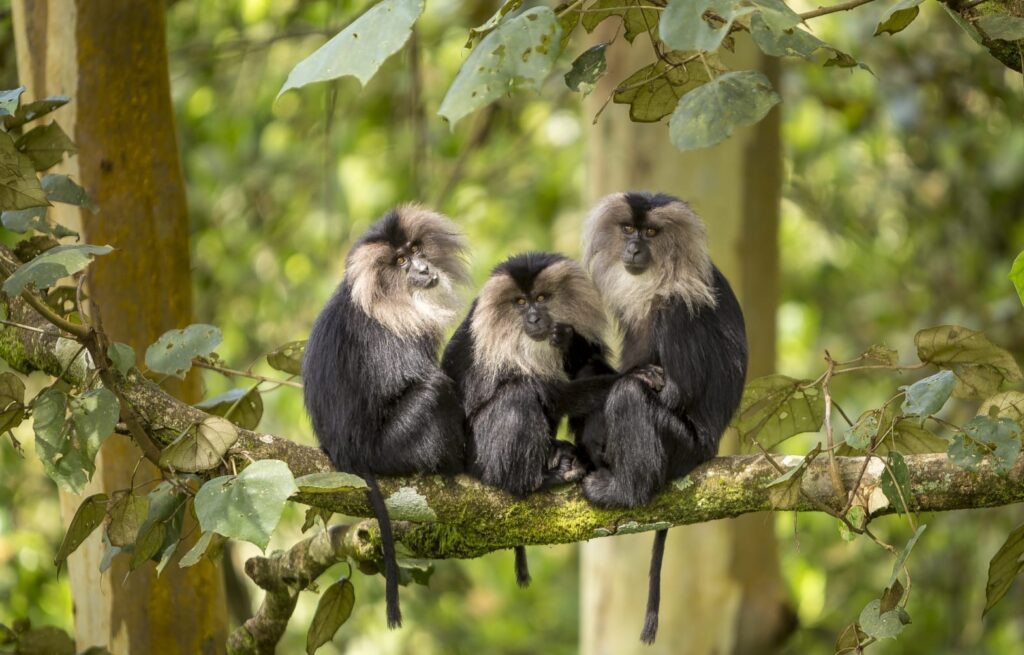
The lion-tailed macaque is the animal most strongly associated with Silent Valley.
This endangered primate is endemic to the Western Ghats. It has dark fur, a distinctive silver-grey mane and a tufted tail. Lion-tailed macaques spend much of their lives in the rainforest canopy and depend heavily on mature tropical evergreen forest.
Silent Valley and its adjoining forest habitats provide an important continuous landscape for the species. The lion-tailed macaque also became a powerful conservation symbol during the Save Silent Valley movement.
The tree Cullenia exarillata is considered an important keystone species within the park because its flowers and fruits provide food for lion-tailed macaques, Nilgiri langurs, giant squirrels and several bird species.
Other Mammals
Other mammals recorded in Silent Valley and adjoining forests include:
- Asian elephant
- Nilgiri langur
- Malabar giant squirrel
- Gaur
- Sambar deer
- Tiger
- Leopard
- Sloth bear
- Nilgiri marten
- Rusty-spotted cat
Most of these animals are naturally elusive. Visitors may notice calls, tracks, droppings or movement in the canopy without seeing the animal clearly.
Silent Valley is a natural rainforest, not a zoo or a safari park designed to guarantee sightings.
Birds of Silent Valley
More than 200 bird species have been recorded from Silent Valley, making the park an important destination for birdwatchers.
Birds associated with the wider landscape include:
- Great hornbill
- Malabar grey hornbill
- Nilgiri wood pigeon
- Malabar trogon
- Grey-headed bulbul
- White-bellied treepie
- Black bulbul
- Southern hill myna
- Several forest raptors, flycatchers and warblers
Early mornings often offer better bird activity. Carrying binoculars is recommended because many species remain high in the canopy or inside thick vegetation.
Reptiles and Amphibians
Silent Valley supports a diverse community of reptiles and amphibians, including several species endemic to the Western Ghats.
Recorded reptiles include:
- King cobra
- Shield-tail snakes
- Beddome’s keelback
- Ceylon cat snake
- Travancore tortoise
- Horsfield’s spiny lizard
Amphibians, stream-dwelling species and smaller rainforest organisms are among the park’s most ecologically important inhabitants, even though they receive less public attention than large mammals.
Butterflies, Moths and Other Invertebrates
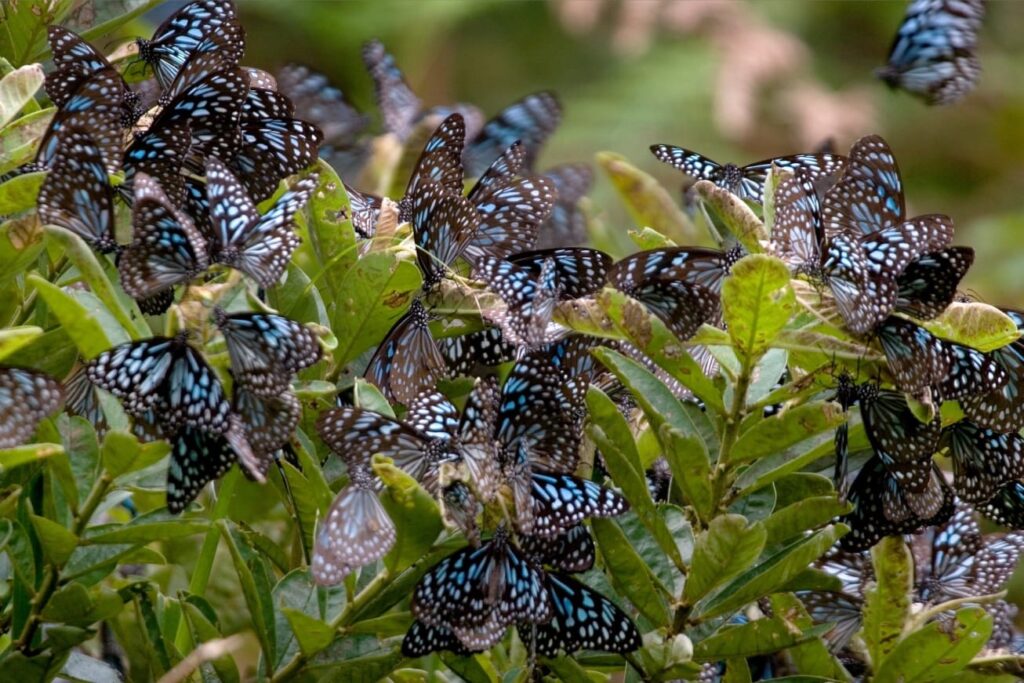
Around 164 butterfly species and approximately 400 moth species have been recorded from the Silent Valley landscape.
Notable butterflies include:
- Sahyadri birdwing
- Malabar rose
- Malabar banded swallowtail
- Malabar banded peacock
- Travancore evening brown
- Sahyadri pale green awlet
Invertebrates, fungi, orchids and smaller organisms are essential to pollination, decomposition, nutrient cycling and the overall health of the rainforest.
The Kunthipuzha River
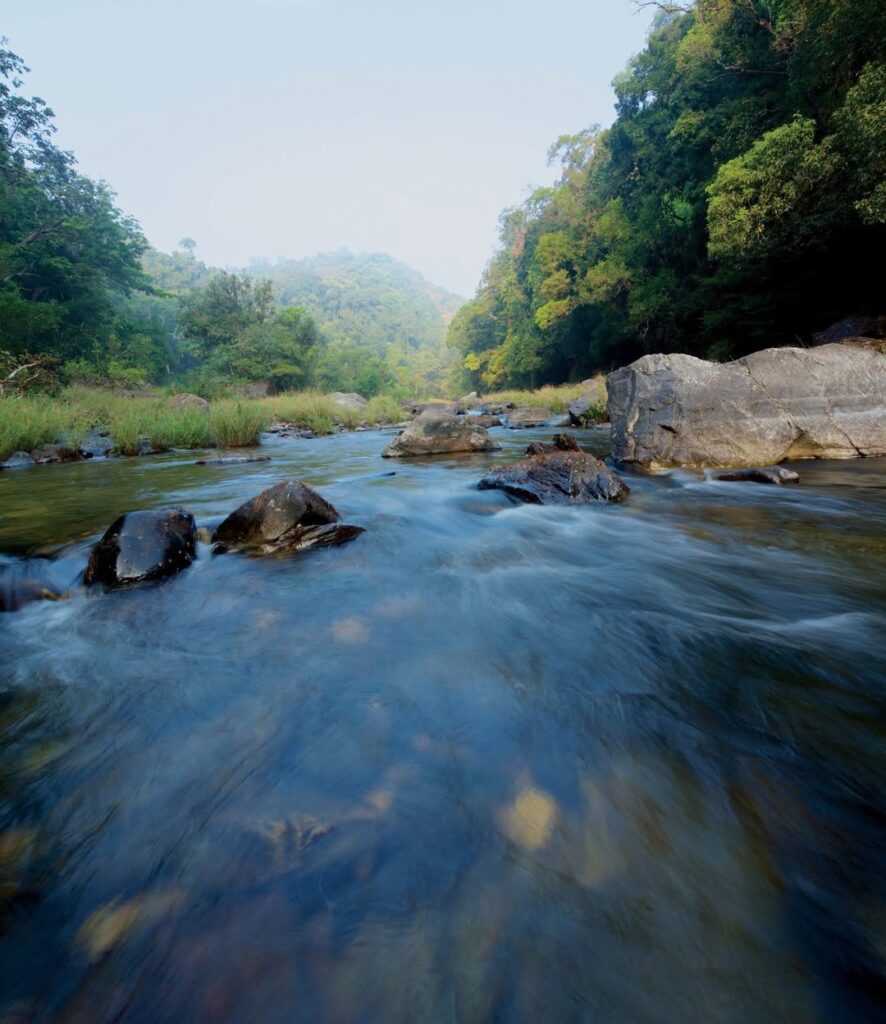
The Kunthipuzha River is the ecological lifeline of Silent Valley.
It flows through the park from north to south, receiving water from forest streams originating on the surrounding slopes before eventually joining the Bharathapuzha river system.
Important tributaries and streams associated with the system include:
- Kunthancholapuzha
- Karingathodu
- Madrimaranthode
- Valiaparathodu
- Kummathanthode
The river supports freshwater fish, amphibians, insects, riparian vegetation and wildlife across the forest ecosystem.
It also occupies a central place in Silent Valley’s conservation history. The proposed hydroelectric project would have altered the river and inundated part of the surrounding rainforest.
Visitors must never contaminate rivers or streams with soap, shampoo, detergent, food waste or plastic. Even products described as biodegradable can disturb sensitive freshwater habitats.
Indigenous Communities of the Wider Attappady Landscape
The wider Attappady–Nilgiri landscape is home to Indigenous communities including the Irula, Muduga and Kurumba peoples.
Their histories, livelihoods and traditional ecological knowledge are closely connected with the forests, rivers and hills of the region.
Indigenous culture should not be treated as a tourist attraction. Community visits, photography and cultural interactions should only take place through authorised, respectful and community-approved programmes.
What Is the Silent Valley Visitor Experience Like?
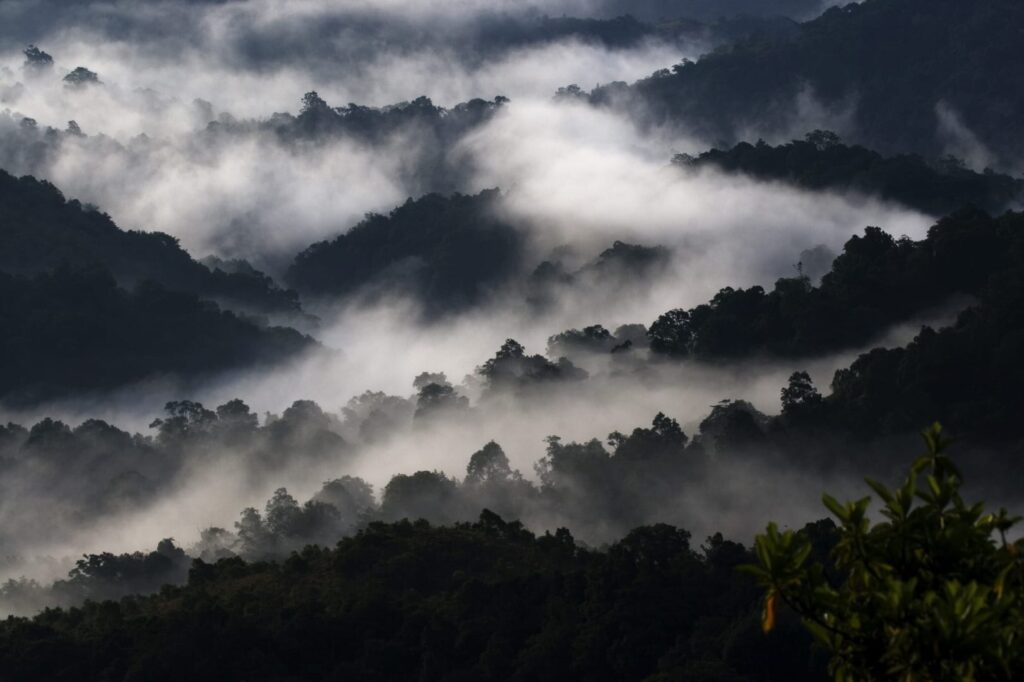
A standard visit to Silent Valley is different from an unrestricted long-distance wilderness trek.
Most visitor programmes begin at Mukkali, where permissions, reporting and Forest Department arrangements are coordinated.
Depending on the programme currently available, the experience may include:
- Forest Department-authorised transportation
- Guided forest walks
- Nature interpretation
- Birdwatching
- Designated viewpoints or observation facilities
- Visits to the Sairandhri area
- Regulated trekking or nature-study programmes
- Camping or specialised ecotourism programmes in approved areas
Silent Valley should not be presented as an open-access trail where visitors can independently enter the core forest. Permits, guides, authorised vehicles and route restrictions are important parts of the conservation system.
Sairandhri
Sairandhri is one of the best-known visitor areas associated with Silent Valley. Depending on the active programme and forest regulations, visitors may travel through the forest landscape and take part in approved walks or interpretation activities.
Routes, facilities and access can change. Always confirm the exact experience included in your booking rather than relying on older travel blogs or social media posts.
Is Silent Valley a Trek or a Safari?
The experience can contain elements of both, depending on the programme.
Visitors may travel through designated forest routes in authorised vehicles and then participate in guided walks. Longer treks, nature camps or specialised programmes require specific permission and may not be available to walk-in visitors.
It is more accurate to describe the experience as a regulated forest and ecotourism programme rather than promising a conventional wildlife safari.
Can Wildlife Sightings Be Guaranteed?
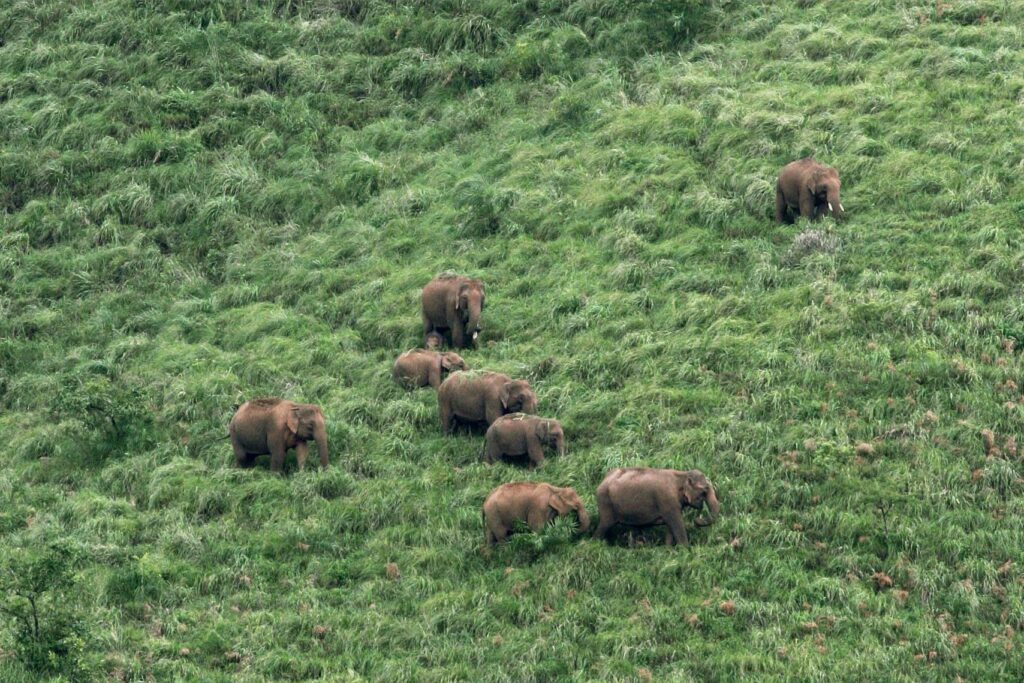
No. Wildlife sightings can never be guaranteed.
Sightings depend on the season, weather, timing, noise levels, animal movement and chance. A healthy rainforest allows its wildlife to remain hidden.
Silent Valley is worth visiting even when larger animals are not seen. The forest, river, birds, plants, insects and natural soundscape are the central experience.
Best Time to Visit Silent Valley National Park
Silent Valley offers different experiences throughout the year, but access is always subject to Forest Department regulations, road conditions and weather.
October to February: Best Overall Conditions
The post-monsoon and winter months generally provide comfortable conditions for most visitors.
- Cooler mornings
- Green post-monsoon landscapes
- Relatively comfortable walking conditions
- Good opportunities for birdwatching
- Lower humidity than the peak monsoon period
This is often the most practical season for families, first-time visitors and general nature travellers.
March to May: Warmer and Drier
Summer may offer clearer conditions, but lower elevations can become hot and humid. Forest access can occasionally be restricted during periods of high fire risk.
Check with the Forest Department before travelling during the dry season.
June to September: Monsoon Rainforest Experience
The southwest monsoon transforms Silent Valley into an intensely green, misty and water-rich landscape.
During the monsoon, visitors should expect:
- Frequent or heavy rainfall
- Strong forest streams
- Wet and slippery surfaces
- High humidity
- Leeches
- Mist and reduced visibility
- Possible road or programme disruptions
Monsoon visits can be memorable, but they require proper rain protection and flexibility. Forest authorities may restrict, modify or cancel access when conditions become unsafe.
How to Reach Silent Valley National Park
Mukkali is the principal reporting and visitor gateway for Silent Valley National Park.
Travel distances vary depending on the exact starting point, road selected and whether the destination is calculated to Mukkali, Mannarkkad or another park facility.
By Road
Approximate road distances include:
- Palakkad to Silent Valley region: approximately 55 km
- Mannarkkad to Silent Valley region: approximately 40 km
- Thrissur to Silent Valley region: approximately 97 km
- Pollachi to Silent Valley region: approximately 100 km
Travellers from Kozhikode can approach through suitable regional routes towards Mannarkkad and Mukkali. Travellers from Coimbatore may approach through the Anaikatti–Attappady side, subject to current road conditions.
Bus services operate between Mannarkkad and Mukkali, but schedules should be confirmed locally. Transportation beyond the visitor gateway must follow Forest Department arrangements.
By Train
Palakkad Junction is one of the nearest major railway stations, located approximately 52–70 km away depending on the destination point and route used.
Travellers should account for additional road travel from the railway station to Mukkali.
By Air
Practical airport options include:
- Coimbatore International Airport: approximately 75–100 km, depending on route and destination point
- Calicut International Airport: a practical option for travellers arriving from northern Kerala
- Cochin International Airport: approximately 160 km or more, depending on route
Coimbatore is generally considered the nearest major airport. Actual travel time depends on traffic, weather and road conditions.
What to Carry for a Silent Valley Trek or Forest Visit
Essential Items
- Comfortable trekking shoes with reliable grip
- Lightweight full-length trousers
- Quick-drying shirt or T-shirt
- Rain jacket or poncho
- Reusable water bottle
- Personal medication
- Government-issued photo ID
- Small backpack
- Waterproof pouch for phone and documents
- Small towel
- Spare socks
- Binoculars for birdwatching
- Camera protection during wet weather
Additional Items for Monsoon
- Leech socks or gaiters
- Dry bag or waterproof backpack cover
- Spare lightweight clothing
- Approved leech deterrent
- Compact umbrella, where permitted
Avoid spraying strong chemicals indiscriminately inside streams or sensitive forest habitats.
What to Wear in Silent Valley
Choose clothing that is functional, comfortable and unobtrusive.
Recommended colours include:
- Olive green
- Dark green
- Brown
- Grey
- Navy blue
- Other neutral colours
Avoid fluorescent or excessively bright clothing, particularly when birdwatching or observing wildlife.
Full sleeves and full-length trousers provide better protection from insects, vegetation and leeches.
Quick-drying synthetic fabrics are usually more practical than heavy cotton in humid or rainy conditions.
Is Silent Valley Suitable for Beginners?
Many authorised Silent Valley visitor experiences are manageable for beginners with basic mobility. However, suitability depends on the exact programme.
Consider the following:
- Walking distance
- Trail surface
- Elevation gain
- Duration
- Rainfall and weather
- Individual fitness
- Age restrictions
- Current Forest Department rules
People with serious knee problems, uncontrolled asthma, significant heart conditions or limited mobility should discuss the full itinerary with the organiser before booking.
Children and older adults may be able to participate in selected programmes, but suitability should be assessed using the specific itinerary rather than the destination name alone.
Silent Valley for Birdwatchers and Photographers
Silent Valley rewards patience. The dense forest can make wildlife observation challenging, but this is part of what keeps the ecosystem wild.
Birdwatching Tips
- Begin early whenever the programme permits
- Carry binoculars
- Wear muted colours
- Walk quietly
- Watch fruiting trees and canopy movement
- Listen carefully before attempting to locate a bird
- Avoid crowding a sighting
- Do not use recorded bird calls unless specifically authorised
Photography Tips
- Carry a waterproof camera cover
- Expect low light inside the rainforest
- Use a telephoto lens for canopy wildlife
- Use a macro lens for insects, fungi and plants
- Avoid using flash around wildlife
- Do not leave authorised paths for a photograph
- Do not block the trail while setting up equipment
Photography must remain secondary to safety, wildlife welfare and Forest Department regulations.
Responsible Travel Guidelines for Silent Valley
Silent Valley exists primarily for conservation. Every visitor has a responsibility to reduce their impact.
Keep Noise Low
Do not play music through Bluetooth speakers or mobile phones. Speak softly and allow other visitors to experience the natural soundscape.
Noise can disturb wildlife and reduce everyone’s chance of observing birds and mammals.
Carry Back All Waste
Never leave behind:
- Plastic wrappers
- Tissues
- Water bottles
- Food waste
- Cigarette filters
- Sanitary waste
Waste described as biodegradable should not be discarded inside the forest.
Never Feed Wildlife
Feeding animals changes their natural behaviour and diet. It can increase disease, dependency and conflict between wildlife and visitors.
Stay With the Authorised Guide
Do not leave the authorised route or enter restricted areas. Dense rainforest terrain can be disorienting, and wildlife encounters are unpredictable.
Do Not Collect Natural Materials
Do not remove flowers, orchids, fungi, seeds, insects, stones or any other natural material from the forest.
Respect Streams and Rivers
Do not use soap, shampoo or detergent in natural water sources. Avoid throwing food, plastic or other waste into streams.
Respect Wildlife Distance
Never surround, chase, call or provoke an animal for a photograph. Observe quietly from a safe distance.
Places to Visit Near Silent Valley
Depending on available time, road conditions and local permissions, travellers may combine Silent Valley with other destinations in the region.
- Attappady
- Bhavani River areas near Mukkali
- Kanjirapuzha Dam
- Siruvani region
- Mannarkkad
- Palakkad town
- Palakkad Fort
- Other authorised ecotourism destinations in the Nilgiri landscape
Verify access, travel time and route conditions before combining several forest destinations in a single itinerary.
Book Your Silent Valley Experience with KeralaTrekking
Ready to experience one of India’s last untouched rainforests?
KeralaTrekking organizes carefully planned 2-Day / 1-Night Silent Valley experiences with everything arranged in advance, so you can focus on enjoying the rainforest.
Our Silent Valley Experience Includes
- ✅ Forest entry coordination
- ✅ Experienced trek leaders
- ✅ Comfortable accommodation
- ✅ Meals as per itinerary
- ✅ Transportation from selected pickup points
- ✅ Guided rainforest experience
- ✅ Safety briefing before the trek
- ✅ Small group experience
👉 View Upcoming Batches
📲 WhatsApp: +91 88489 27969
Planning to Visit on Your Own?
Entry into Silent Valley National Park is regulated by the Kerala Forest Department. Visitors should not enter restricted forest areas without official permission.
Before travelling, confirm:
- Whether the park is currently open
- Current reporting and entry timings
- Permit availability
- Guide requirements
- Authorised vehicle arrangements
- Current charges
- Camera or equipment fees, if applicable
- Activities included in the programme
- Age and fitness restrictions
- Weather-related advisories
- Cancellation and refund rules
Do not rely on old blog posts for entry fees or timings. Operational rules and charges can change. Silent Valley National Park
Mukkali P.O., Mannarkkad
Palakkad, Kerala – 678582
Phone:+91 85898 95652 / +91 96455 86629
Email:mail@silentvalley.gov.in
Contact the park office before a long journey, especially during monsoon, fire season or periods of severe weather alerts.
Frequently Asked Questions About Silent Valley National Park
Where is Silent Valley National Park located?
Silent Valley National Park is located in the Nilgiri Hills of Palakkad district, Kerala. Mukkali is the main visitor and administrative gateway.
Why is Silent Valley National Park famous?
Silent Valley is famous for its tropical evergreen rainforest, rich biodiversity, lion-tailed macaques, Kunthipuzha River and the historic conservation movement that stopped a proposed hydroelectric project.
How large is Silent Valley National Park?
The national park core covers 89.52 square kilometres. Together with its adjoining buffer forests, the Silent Valley administrative landscape covers approximately 237.52 square kilometres.
Is Silent Valley part of the Nilgiri Biosphere Reserve?
Yes. Silent Valley National Park was included in the core area of the Nilgiri Biosphere Reserve in 1986.
Is Silent Valley a UNESCO World Heritage Site?
Silent Valley National Park is an official component of the serial Western Ghats UNESCO World Heritage property.
Can tourists trek inside Silent Valley?
Visitors can participate in authorised guided walks, trekking activities and ecotourism programmes, depending on current availability. Independent entry into restricted forest areas is not permitted.
Can private vehicles enter Silent Valley?
Vehicle access within the protected forest is regulated. Visitors must follow the transportation arrangement approved for their programme and should not assume that unrestricted private vehicle access is allowed.
What is the best time to visit Silent Valley?
October to February generally provides comfortable weather for most visitors. Monsoon offers a lush rainforest experience but also brings heavy rain, leeches, slippery surfaces and possible programme disruptions.
Is Silent Valley open during monsoon?
Visits may operate during parts of the monsoon, but access depends on rainfall, road conditions, weather alerts and Forest Department safety decisions. Always confirm before travelling.
Are there leeches in Silent Valley?
Yes. Leeches are common in wet forest areas, particularly during the monsoon. Full-length clothing, proper footwear and leech socks are recommended.
Are wildlife sightings guaranteed?
No. Silent Valley is a natural rainforest, and wildlife sightings depend on animal movement, weather, timing and chance.
Is Silent Valley suitable for beginners?
Many organised visitor programmes are suitable for beginners with basic mobility. Suitability depends on the route, walking distance, weather and individual health.
Is Silent Valley suitable for children?
Selected programmes may suit children, but parents should confirm the walking distance, age restrictions, weather conditions and exact itinerary before booking.
How much time is needed to visit Silent Valley?
The main forest experience may take most of a day when reporting, transportation and guided activities are included. A two-day itinerary provides more time for travel, accommodation and nearby experiences.
Is mobile network available in Silent Valley?
Mobile connectivity can be weak or unavailable in forest areas. Download important documents in advance and inform family members that you may be temporarily unreachable.
Which is the nearest railway station to Silent Valley?
Palakkad Junction is one of the nearest major railway stations. Road travel is required from the station to Mukkali.
Which is the nearest airport to Silent Valley?
Coimbatore International Airport is generally considered the nearest major airport. Calicut International Airport may also be practical for travellers arriving from northern Kerala.
Experience Silent Valley with KeralaTrekking
KeralaTrekking organises guided Silent Valley experiences for travellers who want to explore this exceptional rainforest responsibly.
Depending on the published itinerary, the programme may include:
- Forest permission coordination
- Guided nature experience
- Trek leadership and participant support
- Accommodation
- Meals as mentioned in the itinerary
- Transportation from selected pickup points
- Preparation and safety instructions
Inclusions, routes and schedules may vary between batches. Review the specific event page before completing your booking.
View Silent Valley Trek Details
For booking assistance, contact KeralaTrekking on WhatsApp: +91 88489 27969
Silent Valley is not a forest to conquer. It is a forest to enter quietly, experience responsibly and leave exactly as you found it.
Official References